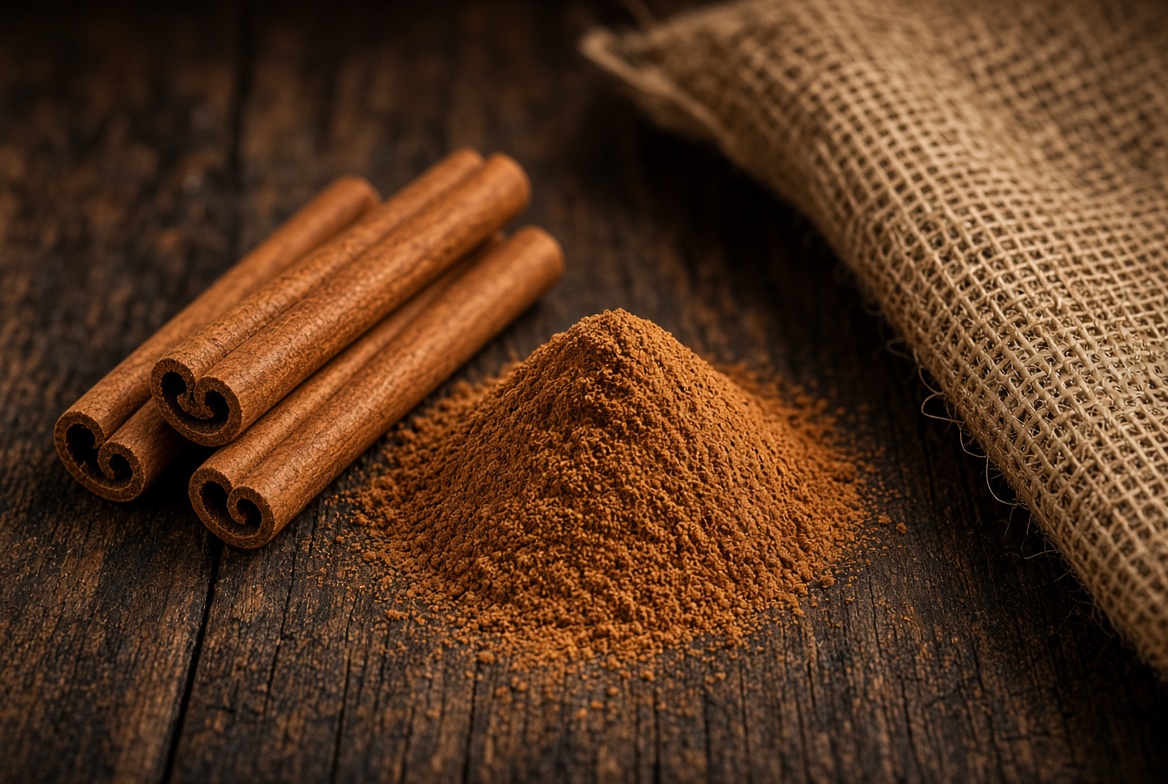
Most supermarket cinnamon in the United States is Cassia.
Two common types
| Type | Typical label | Kitchen note |
|---|---|---|
| Cassia | Often sold simply as “cinnamon” | Bold flavor. Higher coumarin. Fine in ordinary cooking amounts for most adults. |
| Ceylon | Sometimes “true cinnamon” or Cinnamomum verum | Milder, more layered flavor. Much lower coumarin. Often chosen when cinnamon is used often. |
Coumarin is a natural plant compound. In high, repeated amounts it has been linked to liver strain in sensitive people. Culinary pinches in oatmeal or baked goods are different from taking concentrated cinnamon supplements every day.
What it contributes in food
Cinnamon’s aroma comes largely from cinnamaldehyde and related oils. The spice also contains polyphenols. Those plant compounds are one reason cinnamon shows up in nutrition research. Presence of a compound in a spice is not the same as a proven health effect from eating a teaspoon in breakfast.
What research has examined
Randomized trials and meta-analyses have studied cinnamon powders and extracts on routine laboratory markers used in nutrition research. Findings are not uniform. Doses, cinnamon type, study length, and participant groups differ. Some papers report changes in certain markers; others find little or no effect.
That body of work does not make cinnamon a treatment for any disease. It also does not justify high-dose capsules without medical guidance. This site describes cinnamon as a food spice.
Kitchen use
- A pinch on oatmeal, coffee, or roasted fruit
- Savory stews, chili, and rice dishes
- Baked goods and spice blends
Ground cinnamon loses aroma faster than sticks. Keep it in a closed jar away from heat.