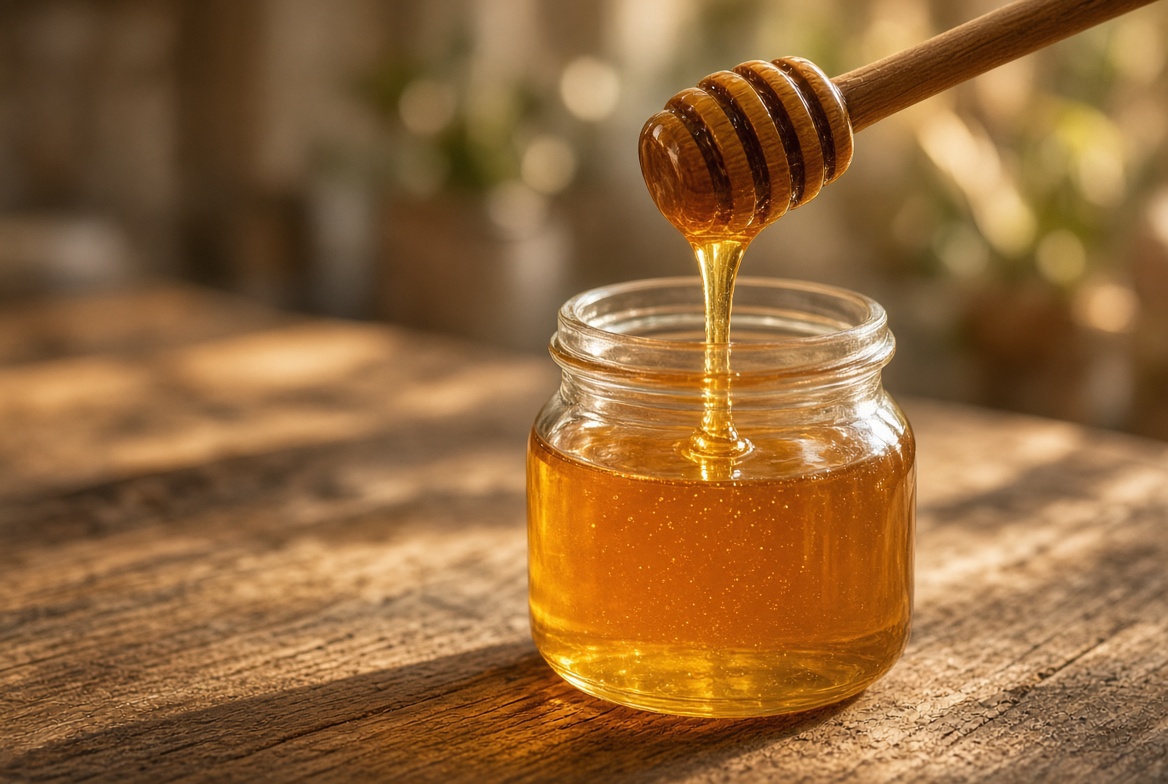
Flavor and color change with the flowers bees visit.
What it is
Honey is produced when honey bees collect plant nectar, reduce the water content, and store the result in honeycomb. By weight it is mostly fructose and glucose, with water and small amounts of acids, enzymes, minerals, and plant polyphenols. The exact mix depends on the floral source and how the honey is handled after harvest.
Labels such as clover, orange blossom, wildflower, or buckwheat describe flavor more than a medical grade. “Raw” usually means the honey was strained but not heavily filtered or heated. Processing can change texture and aroma. It does not turn honey into a medicine.
What people typically use it for
- Sweetening tea, coffee, or warm milk
- Baking, granola, and dressings
- Finishing yogurt, fruit, or oatmeal
- A traditional kitchen soother in warm drinks for older children and adults
What research has looked at
Reviews of human trials have examined honey as a food in several contexts, including how it compares with other sweeteners on routine nutrition markers and how it is used in some cough studies in children older than one year. Results vary with the type of honey, the dose, the comparison food, and study quality.
Honey also appears in medical literature on wound dressings. That work involves sterile, medical-grade products used by clinicians. Table honey from a pantry jar is not a substitute for clinical wound care.
Choosing a jar
- Buy from a producer or brand you trust. Honey is sometimes diluted with other syrups.
- Crystallization is normal and does not mean the honey has spoiled. Warm the jar gently in water to loosen it.
- Store tightly closed at room temperature, away from direct sun.